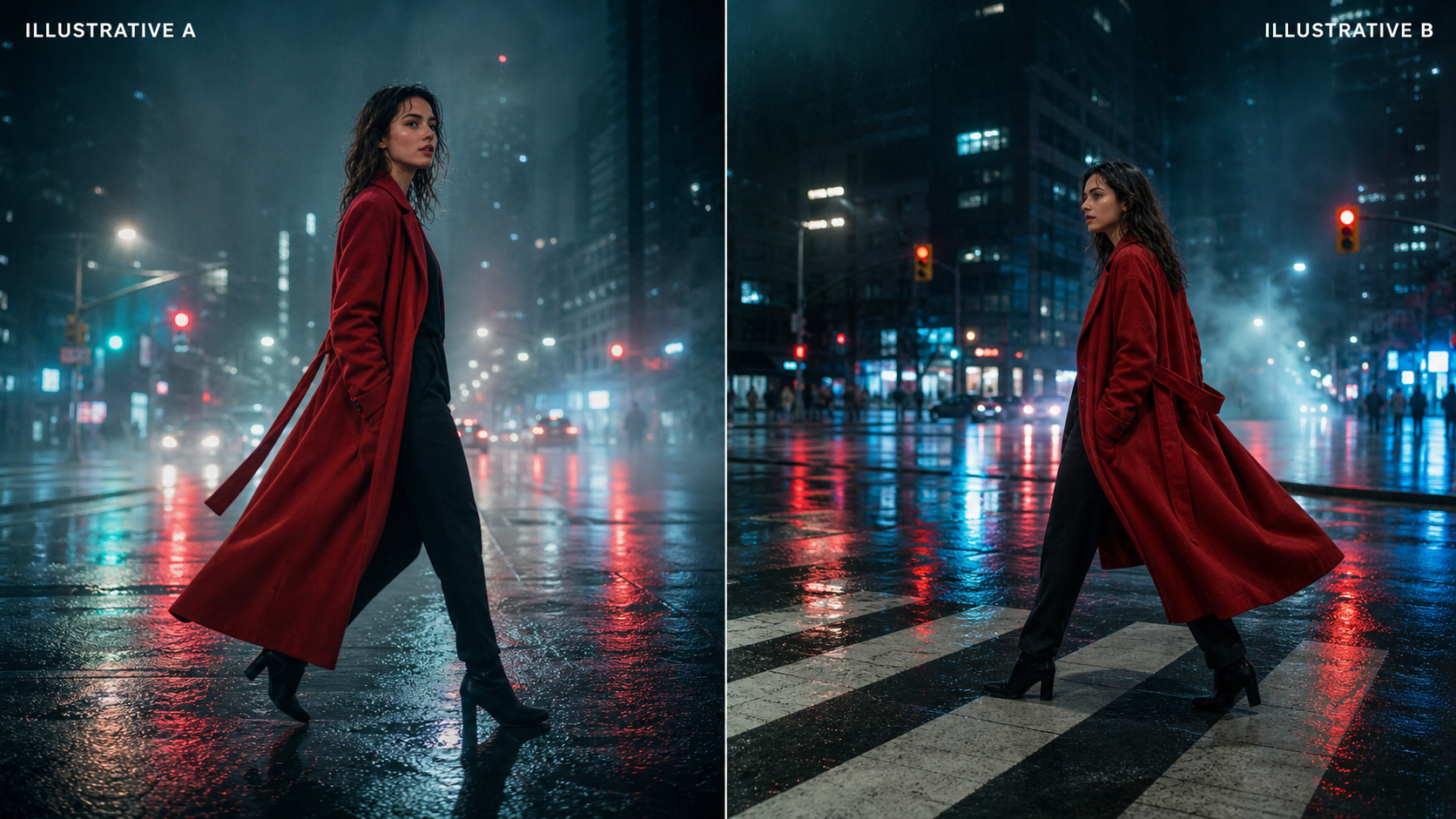
Artificial intelligence has reshaped how we tell stories, bridging the gap between imagination and moving image. From static artwork to dynamic video creation, AI is now giving creators cinematic control at their fingertips. The two names leading this revolution are OpenAI’s Sora 2 and Google DeepMind’s Veo 3 — both redefining what’s possible in text-to-video generation.
While both share the same goal—bringing cinematic storytelling to everyone—they approach it differently. This article explores how the Sora 2 AI video generator in Sora2 app compares with Veo 3 AI in performance, accessibility, and creative vision. The result is an unbiased look at which platform may truly lead the future of AI filmmaking.
🪄 Inside the Sora2 App: How Sora 2 Works
OpenAI’s Sora 2 is not just a model—it’s an experience integrated into the new Sora2 app, a social platform dedicated to AI video creation. Here, users can type short text prompts, upload reference images, and instantly generate moving clips that feel handcrafted by a filmmaker.
The sora 2 ai video generator in Sora2 app is designed for everyone—from digital artists and educators to social media creators—making cinematic storytelling accessible without technical barriers.
Key Features
- Prompt-based interface: Describe a scene in plain language (“a samurai walking through a neon-lit street in the rain”), and the app translates it into a visually coherent sequence.
- Short clips (~10 seconds): Perfect for TikTok, Reels, and YouTube Shorts.
- Visible watermarking: Every Sora 2 clip includes an animated watermark, along with C2PA metadata, marking it as AI-generated to maintain transparency.
- Community feed: The Sora2 app doubles as a social network, allowing users to share, remix, and comment on AI-generated videos.
Limitations
Sora 2 favors speed and safety over complexity. It currently lacks native audio or advanced camera controls, meaning users can’t yet dictate shot angles, sound effects, or transitions. But its simplicity is its strength—it lets anyone create cinematic clips in seconds without needing to understand rendering or editing software.
🎬 What Is Veo 3?
On the other side of the creative spectrum lies Google DeepMind’s Veo 3, a model engineered for professional-grade realism and artistic control. While Sora 2 emphasizes accessibility, Veo 3 aims for cinematic precision.
Veo 3 AI represents Google’s most advanced text-to-video engine. It uses a multimodal transformer architecture to blend text, image, and audio into cohesive short films that mimic live-action cinematography. The model supports around 8 seconds of video output and integrates synchronized soundtracks, enabling end-to-end storytelling.
Key Highlights
- Integrated audio generation: Dialogue, ambient sounds, and background music are automatically produced.
- Photorealistic lighting and motion: Reflective surfaces, shadows, and natural physics are rendered with uncanny realism.
- Invisible watermarking: Uses Google’s SynthID system to embed unremovable provenance data in every frame.
However, Veo 3 is currently API-based, meaning access is limited to approved developers and research partners. It’s a powerful engine, but not as accessible to the everyday creator as the Sora2 app.
⚖️ Setting a Fair Comparison: What Matters in AI Video
To evaluate Sora 2 vs Veo 3, we consider the aspects that matter most to both professionals and casual creators:
- Input Flexibility – Does the model support text-only or image/video prompts?
- Output Duration – How long can the clips be?
- Audio Integration – Does it generate sound and dialogue?
- Visual Realism – How consistent are lighting, motion, and physics?
- Camera Control – Can users influence angles, cuts, and transitions?
- Resolution – Is the output HD or higher?
- Speed & Latency – How fast can you get results?
- Safety & Provenance – How is AI-generated content labeled?
- Accessibility – Who can use it and how easily?
📊 Sora 2 vs Veo 3: Head-to-Head Comparison
| Feature | Sora 2 (in Sora2 App) | Veo 3 AI |
|---|---|---|
| Input Type | Text prompts, limited image support | Text + image |
| Video Length | ~10 seconds | ~8 seconds |
| Audio Support | None | Built-in audio + lip sync |
| Visual Realism | Stylized, cinematic | Photorealistic lighting & motion |
| Camera Control | Limited presets | Basic cinematic panning |
| Resolution | 1080p (experimental) | 1080p standard |
| Watermarking | Visible + C2PA metadata | Invisible SynthID |
| Access | Public via Sora2 app | Developer API only |
| Best Use Case | Social AI short clips | Cinematic short films, art experiments |
🎨 Realism vs Accessibility
The biggest distinction between Sora 2 and Veo 3 lies in their design philosophy.
- Sora 2 democratizes video creation. It’s intuitive, fast, and mobile-friendly—built for the social content era.
- Veo 3, meanwhile, is engineered for authenticity and depth, catering to filmmakers and researchers seeking cinematic detail.
For example, when prompted with “a painter walking through a dreamlike city at dawn,” Sora 2 might generate an expressive, semi-animated clip with stylized colors and dynamic motion. Veo 3, however, would create a photo-realistic scene with accurate lighting, soft shadows, and even the ambient city sounds of birds and footsteps.
The trade-off is clear: Sora 2 excels in accessibility, while Veo 3 wins in immersion and realism.
🔊 Sound, Motion, and Cinematic Control
Audio
Veo 3 integrates natural sound and lip-syncing into its video generation pipeline, producing cohesive short films straight out of the model. This makes it ideal for trailers, art films, and conceptual storytelling.
Sora 2, by contrast, focuses purely on visuals—creators must add their own sound afterward. For social media users, this isn’t a major limitation since soundtracks are often added in-app; for filmmakers, however, it’s a deal-breaker.
Motion and Scene Logic
Veo 3’s camera is calm and realistic, giving a steady cinematic flow, while Sora 2’s shots are more energetic but sometimes inconsistent in object movement.
This difference mirrors the models’ priorities: Veo 3 aims for film-like precision, while Sora 2 prioritizes creativity and speed.
Directorial Influence
Currently, neither model offers full control over shot framing or transitions, though Veo 3’s architecture leaves room for advanced “AI direction” in future versions. Sora 2’s app format may eventually integrate slider-based scene control, bridging the gap between novice users and professional editors.
🔒 Ethics, Transparency, and Safety
Both models handle safety differently—and both approaches have merit.
- Sora 2 enforces visible watermarking and metadata on all outputs, ensuring transparency. This makes it harder for users to pass AI videos as real footage, reducing misinformation risks.
- Veo 3 embeds its provenance invisibly using SynthID, protecting authenticity without affecting aesthetics. However, this method depends on third-party detection tools, which could be less obvious to viewers.
OpenAI’s strict moderation system makes Sora 2 safer for mainstream users, while Veo 3 trusts professionals to handle the technology responsibly. The debate continues: should provenance be invisible for elegance or visible for ethics?
👥 Who Should Use Which?
| User Type | Recommended Model | Why It Fits |
|---|---|---|
| Beginners / Influencers | Sora 2 (in Sora2 App) | Simple interface, instant results, social sharing |
| Filmmakers / Animators | Veo 3 | Realistic motion, integrated sound, cinematic precision |
| Marketers / Brands | Sora 2 | Fast production cycle, clear watermarking for transparency |
| Researchers / Developers | Veo 3 | Accessible via API, allows technical experimentation |
The key takeaway: Sora 2 empowers creators; Veo 3 empowers directors.
🌐 The Bigger Picture: Evolution of AI Video
The comparison between Sora 2 and Veo 3 isn’t just about features—it’s about philosophy.
Sora 2 focuses on democratization, bringing AI filmmaking to the public. Veo 3 focuses on professionalization, refining realism for film-level quality.
Both models hint at what’s coming next:
- Longer, story-driven sequences beyond 10 seconds.
- Full audio-visual fusion with script-to-scene capabilities.
- Interactive control panels for live direction and editing.
- Collaborative AI ecosystems, merging multiple models in one pipeline.
- Standardized watermarking across all AI media.
In time, these two paths—accessibility and precision—will converge, creating a unified generation platform capable of producing short films from a paragraph of text.
🧾 Conclusion
The Sora 2 AI video generator in Sora2 app represents the dawn of a new creative era. It makes filmmaking as easy as typing an idea and hitting “generate.” Its focus on transparency and simplicity ensures safe, social, and ethical creativity.
Meanwhile, Veo 3 AI pushes the boundaries of what “realistic” truly means, offering photorealistic motion, synchronized audio, and cinematic storytelling potential.
So, which leads the future of creative filmmaking?
Both—Sora 2 democratizes creation, and Veo 3 defines perfection.
Together, they point toward an inevitable destination: a world where anyone, anywhere, can direct a film from pure imagination.
Keywords: sora 2 ai video generator in sora2 app, sora 2 vs veo3, ai video generation 2025, openai sora 2, veo3 ai video, ai filmmaking comparison, creative ai tools.