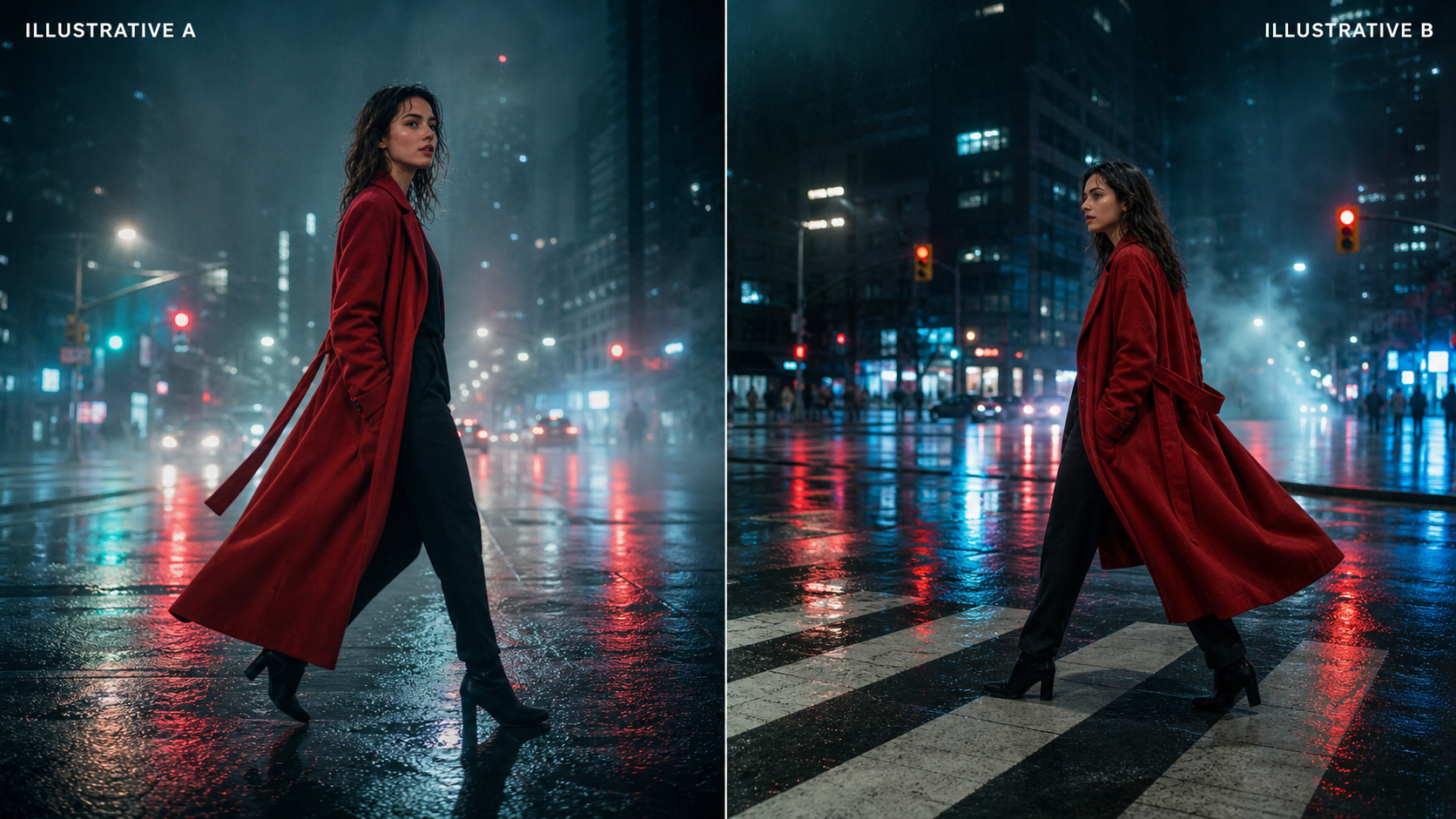
Seedance 2.0 is being positioned as a reference‑first, multimodal AI video generator: instead of relying on text alone, you can steer results with text + images + video clips + audio (depending on the platform). The promise is simple: more control, more consistency, less “randomness.”
This review is written for creators and marketers who want a clear answer to:
- What Seedance 2.0 is actually good at
- What it still struggles with
- How to evaluate it quickly (without burning a week on testing)
- When it’s worth using—and when you should reach for another tool
What Seedance 2.0 is (in plain English)
Seedance 2.0 is a multimodal video generation workflow that treats reference assets as first‑class inputs. A common way platforms describe it is “direct every aspect like a filmmaker”—meaning you’re encouraged to provide:
- Images to lock in identity, style, wardrobe, environment
- Video clips to guide motion and camera behavior
- Audio to guide timing and mood (beat‑sync, rhythm, ambience)
- Text to explain intent, shot language, and constraints
Some platforms also describe a “Universal Reference” approach and “First/Last Frame” modes, but the core idea remains the same: give the model better guidance, and it behaves more predictably.
Quick spec snapshot (what to check before you test)
Different providers can expose different limits, but a commonly described configuration is:
- Up to 12 reference assets per generation
- Often described as up to 9 images + 3 videos + 3 audio clips
- Video/audio clips commonly described as capped at around 15 seconds each
Why this matters: Seedance 2.0 is not just “a better text‑to‑video model.” It’s a composition tool—your output quality depends heavily on how you curate and assign the role of each asset.
How this review evaluates Seedance 2.0 (so results are trustworthy)
When you test any AI video model, “I typed a prompt and it looked cool” isn’t a useful evaluation. A real review should check whether the model is controllable and repeatable.
Here’s a practical test matrix that surfaces the truth quickly:
1) Text → Video baseline
Purpose: see basic prompt adherence and artifact rate.
- Does it follow subject + action + camera move?
- Do faces drift? Does the scene “melt”?
- Do you see flicker or strange motion physics?
2) Image → Video consistency test
Purpose: see whether the model preserves identity.
- Use a clear character or product image.
- Ask for one simple motion.
- Check whether the model changes the face, outfit, logo, or key details.
3) Motion reference test
Purpose: see whether the model follows camera language.
- Use a short reference clip with a clear move (slow dolly, pan, handheld, etc.).
- Compare the generated camera behavior to the reference.
4) Audio timing test (if supported)
Purpose: see whether timing follows rhythm.
- Use a simple beat.
- Ask for a short 3‑scene montage that cuts on downbeats.
Scoring categories
- Consistency: identity, outfit, props, background stability
- Motion: naturalness, readability, lack of rubbery distortion
- Camera obedience: does it follow shot type and movement?
- Artifacts: hands, faces, text/logos, edge warping, flicker
- Iteration speed: how fast you can converge with small edits
What Seedance 2.0 does best (strengths)
1) Reference‑driven controllability
Seedance 2.0 is strongest when you use it like a director:
- Images define what it should look like
- Video defines how it should move
- Audio defines when it should move
- Text defines why (intent) and what must not change
Compared to text‑only video tools, this approach usually increases the odds that your output matches your mental picture.
2) Character and style continuity
The most compelling “win” for Seedance 2.0 (in how it’s marketed and used) is continuity across shots. If you’re making a recurring mascot, a serialized short, or a consistent brand look, reference‑first workflows can reduce identity drift.
3) Previs and concept trailer usefulness
Even when the output isn’t “final film quality,” Seedance 2.0 can be valuable as previsualization:
- Testing mood and composition
- Exploring camera language
- Drafting a sequence before doing full production
That makes it appealing for creative teams who need fast iterations.
Where it still struggles (limitations and gotchas)
1) Conflicting references cause “averaging” and drift
If you provide:
- multiple faces with different proportions
- mixed lighting styles (warm studio + cool night neon)
- mixed lens looks (phone camera vs cinematic shallow DOF)
…the model may blend them into an unstable output. With Seedance 2.0, reference hygiene is everything.
2) Fine detail is fragile (hands, text, logos)
Most AI video models struggle when:
- hands are small or move quickly
- text is thin or at an angle
- logos are tiny or motion‑blurred
Seedance 2.0 can still show these failure modes, especially in fast edits.
3) Access and feature variability across platforms
Some providers offer “try free,” others label features as “coming soon,” and controls may differ by interface. You should evaluate Seedance 2.0 where you plan to use it, not just from a single demo.
Output quality and realism (what you should expect)
When it looks great
You’ll typically get the cleanest outputs when you ask for:
- one subject
- one main action
- one camera move
- one consistent lighting mood
Examples: a slow push‑in character intro, a product rotation, a simple walk‑and‑turn.
When it looks weird
Output can degrade when you stack complexity:
- fast multi‑character interactions
- rapid camera whips + zooms + cuts
- tiny hands performing detailed gestures
- heavy motion blur plus small text
If you want a complex sequence, treat it like production: build it shot by shot.
Prompt adherence and control (the “director test”)
Seedance 2.0 tends to follow instructions better when your prompt is structured like a shot list.
A practical prompt structure
- Subject
- Action
- Camera
- Scene
- Style
- Constraints (“keep / do not change”)
A director‑style template
Subject: [who/what], [look], [wardrobe/material details].
Action: [one primary action], [emotion/intent].
Camera: [shot type], [lens feel], [movement], [speed].
Scene: [location], [time], [weather], [lighting].
Style: [cinematic/anime/documentary/commercial], [palette], [grain/texture].
Keep / constraints: keep identity, keep outfit, no extra people, no face morphing, no flicker.
What improves camera obedience
- Put camera instructions on their own line.
- Use standard film language (close‑up, wide, dolly in, pan left, tilt up).
- If you need a very specific move, add a short motion reference clip.
Three real‑world workflows (and who each is for)
1) Text → Video (fast ideation)
Use it when: you want speed and you can accept variance.
Great for: brainstorming, rough visuals, quick social concepts.
Avoid when: you need exact camera choreography.
2) Image → Video (start‑frame driven)
Use it when: you already have a strong visual anchor.
Great for: character reveals, product shots, “bring this still to life.”
Tip: keep the action simple at first—then expand.
3) Multimodal (Image + Video + Audio + Text) (highest control)
Use it when: you care about consistency, motion, and timing.
Great for: UGC ads, serialized character shorts, music edits, previs.
Tradeoff: more setup, but fewer wasted generations.
Best use cases (and who should skip it)
Best use cases
- Recurring character content (shorts, series, mascots)
- Brand/style consistency for marketing clips
- Previsualization for story scenes, trailers, pitch decks
- Beat‑synced edits if your platform supports audio guidance
Use carefully (or skip) if
- you need perfect logo/text fidelity with zero post work
- you need precise physical simulation (complex object interactions)
- you need multi‑character dialogue with perfect lip motion (still a hard category)
Comparisons that matter (positioning)
Instead of “which model is best,” a better question is: which workflow matches your goal?
- If you want creative surprise, text‑heavy models can be fun.
- If you want repeatable control, reference‑driven workflows tend to win.
- If you want precise motion transfer, look for tools that emphasize motion control workflows.
Seedance 2.0 fits strongest in the “directable, reference‑first” bucket.
Practical tips to get better results on your first try
Reference hygiene rules
- Use one primary identity image.
- Use one motion clip if you need a specific camera move.
- Use 1–3 style images max, and keep them consistent.
Start with short test takes
A 3–6 second clip is your best diagnostic tool. Once you lock look and motion, scale up.
Iterate one variable at a time
If something fails, change only one thing:
- tighten the subject description
- simplify the action
- clarify the camera line
- remove a conflicting reference
That’s how you converge quickly.
Responsible use (quick, practical)
If your content includes recognizable people or copyrighted IP, avoid deceptive outputs and handle permissions appropriately. If viewers could mistake your video for real footage, label it clearly.
Try tools on Flux Pro AI (recommended links)
If you want a convenient place to test multiple AI video workflows and compare outputs, you can try tools on Flux Pro AI:
- Start here: Flux Pro AI
- Video hub: Flux Video AI
- Image/photo animation: Photo to Video Generator
- Style remix workflow: Video to Video Generator
- Motion transfer option: Kling 2.6 Motion Control
- Plans and credits: Flux Pro AI Pricing
Final take
Seedance 2.0 is most compelling when you treat it as a directable video system, not a “one‑prompt magic button.” Its strengths show up in reference‑driven consistency and camera intent, while its weaknesses are familiar AI‑video pain points: hands, text/logos, and instability when you overload complexity.
If your workflow rewards iteration and continuity—recurring characters, brand clips, previs—Seedance 2.0 is worth testing. If you need flawless detail and exact timing, plan on a tighter shot‑by‑shot approach (and some post).